Why manual mode (M) is essential
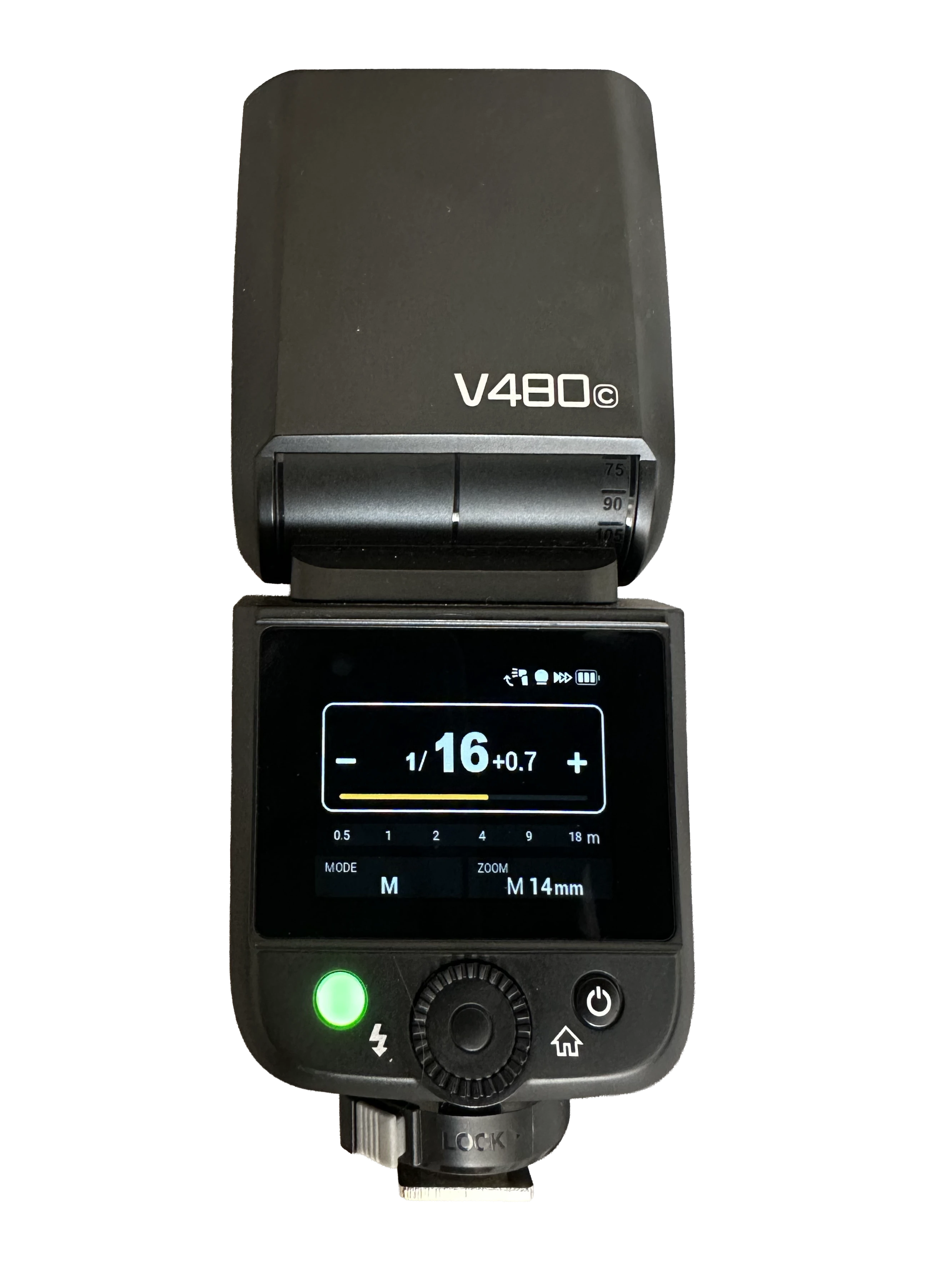
A speedlight typically offers several modes: TTL (E-TTL, i-TTL, etc., depending on the brand), which calculates power automatically from a pre-flash reading and your exposure settings (aperture, ISO, lens-reported distance), and manual mode (M), where you set the power yourself in steps (1/1, 1/2, 1/4... down to 1/128).
With a diffuser, TTL becomes unusable: the power calculation doesn't account for the light lost passing through the diffusion panel, nor the extra distance between the flash head and the subject. The result is exposure that varies from shot to shot with no consistent logic. Manual mode, on the other hand, gives you a fixed, repeatable setting: once you've found the right power for a given working distance, it stays valid shot after shot.
The flash's internal zoom: always as wide as possible
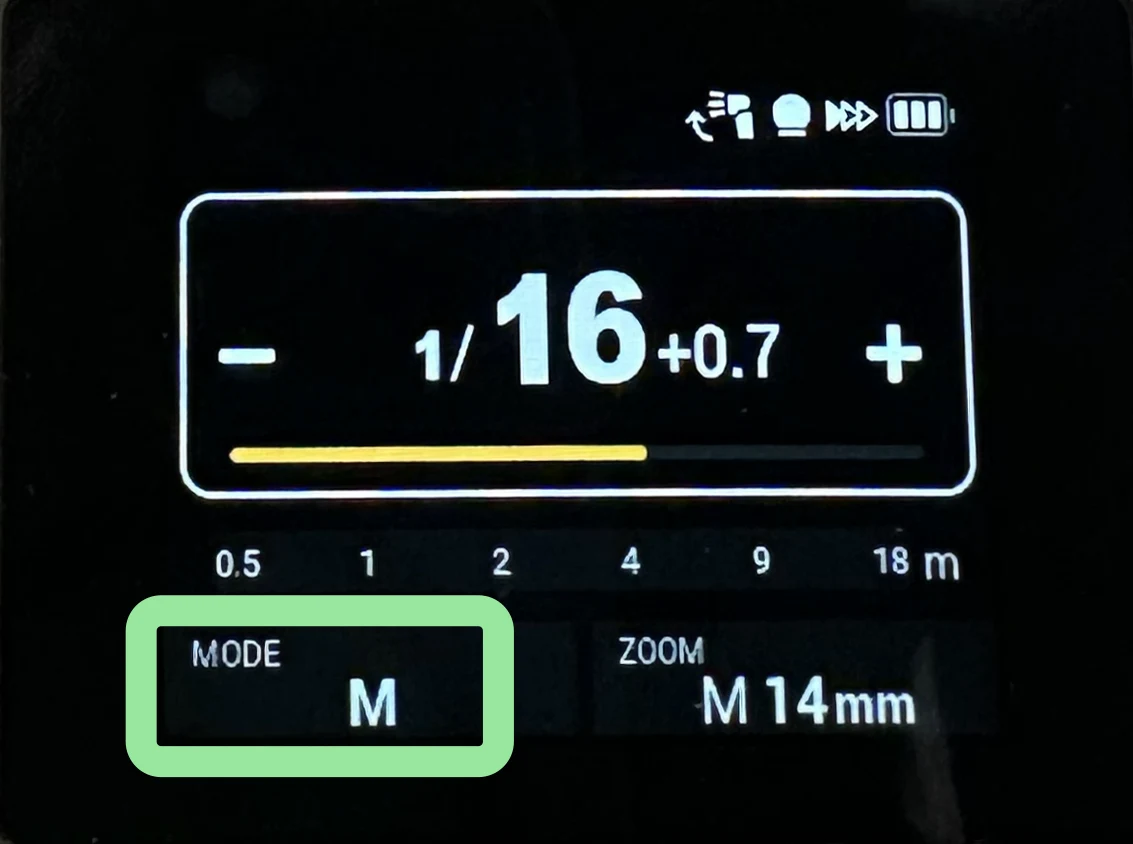
Most speedlights have a zooming head that narrows or widens the beam angle to match the lens's focal length (in regular photography, without a diffuser). With a diffuser, that automatic adjustment no longer makes sense: you need to set the flash zoom to its widest possible value (usually 24mm or below), regardless of the focal length actually in use.
A narrow beam creates a hot spot in the center of the diffusion panel and leaves its edges dark — the diffusion becomes uneven. A wide beam, by contrast, floods the entire surface of the diffuser evenly, a necessary condition for soft, even light on the subject.
Flash duration: what actually freezes motion
Flash duration (often noted as t.1 or t.5) is the time the flash tube actually spends emitting light — not to be confused with shutter speed, which is capped by the camera's sync speed (typically 1/200s to 1/250s). It's this duration, not the shutter speed, that freezes motion in macro.
The lower the power you choose, the shorter the flash burst: at full power (1/1), duration can be around 1/1000s; at 1/64 or 1/128, it can drop below 1/20,000s. A moving live subject (antennae, legs, a slight breeze) will be frozen sharp at low power, whereas high power can leave slight blur even with a flash.
From there, you can adjust power to the scene: a subject with no background nearby will need more power than one with a close background, since the latter benefits from a bit of bounced light that supplements the direct exposure.
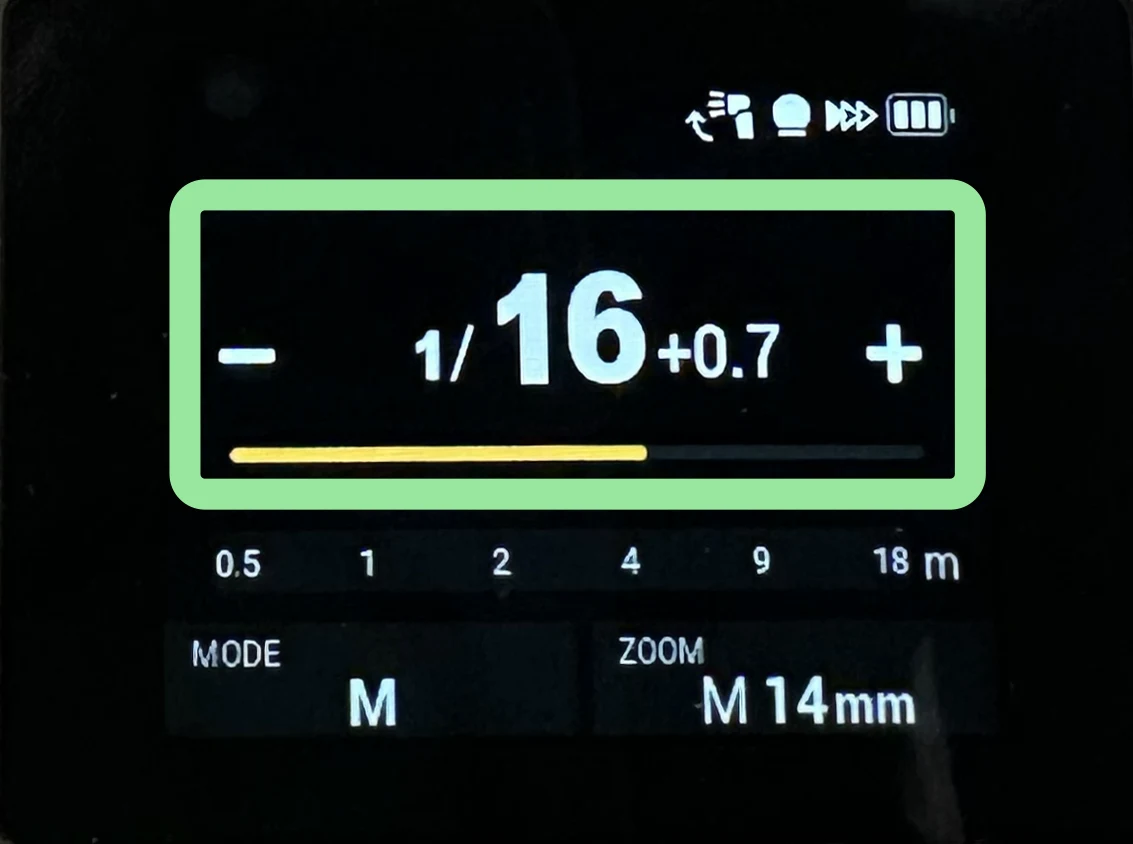
My settings
I generally use: 1/250s — f/7.1 — ISO 320 at 100mm, with flash power between 1/32 and 1/8 on a Godox V480 — a more powerful flash, which lets me stay on lower power steps for an equivalent result.
When I start a session in the field, I take a first test shot and adjust the power based on the result. With experience, you learn to guess the right setting fairly quickly.
In summary
With a diffuser, three settings matter more than any other: manual mode (the only one compatible with the diffuser's light loss), the flash zoom set as wide as possible (for even diffusion across the whole panel), and power adjusted to the scene — since it's power, via flash duration, that actually freezes motion, far more than shutter speed does.