What is a speedlight?
A speedlight (also called a "hot-shoe flash") is an external flash that mounts on the camera's hot shoe, with a head that tilts and swivels independently of the camera body. Unlike a built-in flash, it offers significantly more power and can be paired with light-modifying accessories: diffusers, softboxes, reflectors.
In macro, it's favored for three reasons: it freezes subject motion thanks to a very short flash duration, it compensates for shallow depth of field by letting you stop down without sacrificing shutter speed, and it can be brought right up close to the subject via a diffuser for soft light despite its small source size.
Parameters common to every speedlight
- Guide number (GN): indicates maximum power. Less critical in macro than in regular photography since the flash works at short range, but a comfortable GN leaves room to compensate for the light loss through a diffuser.
- TTL / manual: TTL calculates power automatically, manual lets you set it in steps (1/1 to 1/128). In macro, manual is often preferred for its repeatability.
- Power range: the ability to go very low (1/128, even 1/256) is valuable at close range, where even minimum power can be enough to overexpose.
- Recycle time: important for live subjects that won't hold still.
- Power source: AA batteries or a lithium pack — a choice that affects battery life, weight, and recycle speed.
- Head zoom: secondary with a diffuser, but it does shape how the diffuser needs to be designed to capture the full beam.
- Trigger compatibility: standard hot shoe, proprietary TTL contacts, radio or optical — determines compatibility with your system.
Flash size classes and how they affect diffuser choice
- Compact: light, pleasant to hand-hold, with a smaller head.
- Mid-size: the most common compromise between power, features, and bulk.
- Standard: the most common size and the largest. More powerful and better equipped, but also heavier to hold at arm's length.
To pair one with a diffuser, four things matter: the head's width/height (size of the opening needed), the outline shape (matching mount system), the head's range of motion (rotation/tilt, which must clear without colliding) and the overall weight (stability of the setup at arm's length).
Examples of flashes, camera-brand and third-party
Camera-brand: Canon (Speedlite line, from the 270EX II to the 600EX II-RT), Nikon (SB line, from the SB-500 to the SB-5000), Sony (HVL line, from the HVL-F28RM to the HVL-F60RM2), Fujifilm (EF-X500). The tightest TTL integration, but often pricier and not always designed for off-camera macro use.
Third-party: Godox (V and TT lines), Yongnuo, Neewer, Nissin, Profoto (A line) — credible alternatives, compatible with most camera systems.
My pick: the Godox lineup
I most often turn to Godox for my diffusers, purely for the price-to-performance ratio.
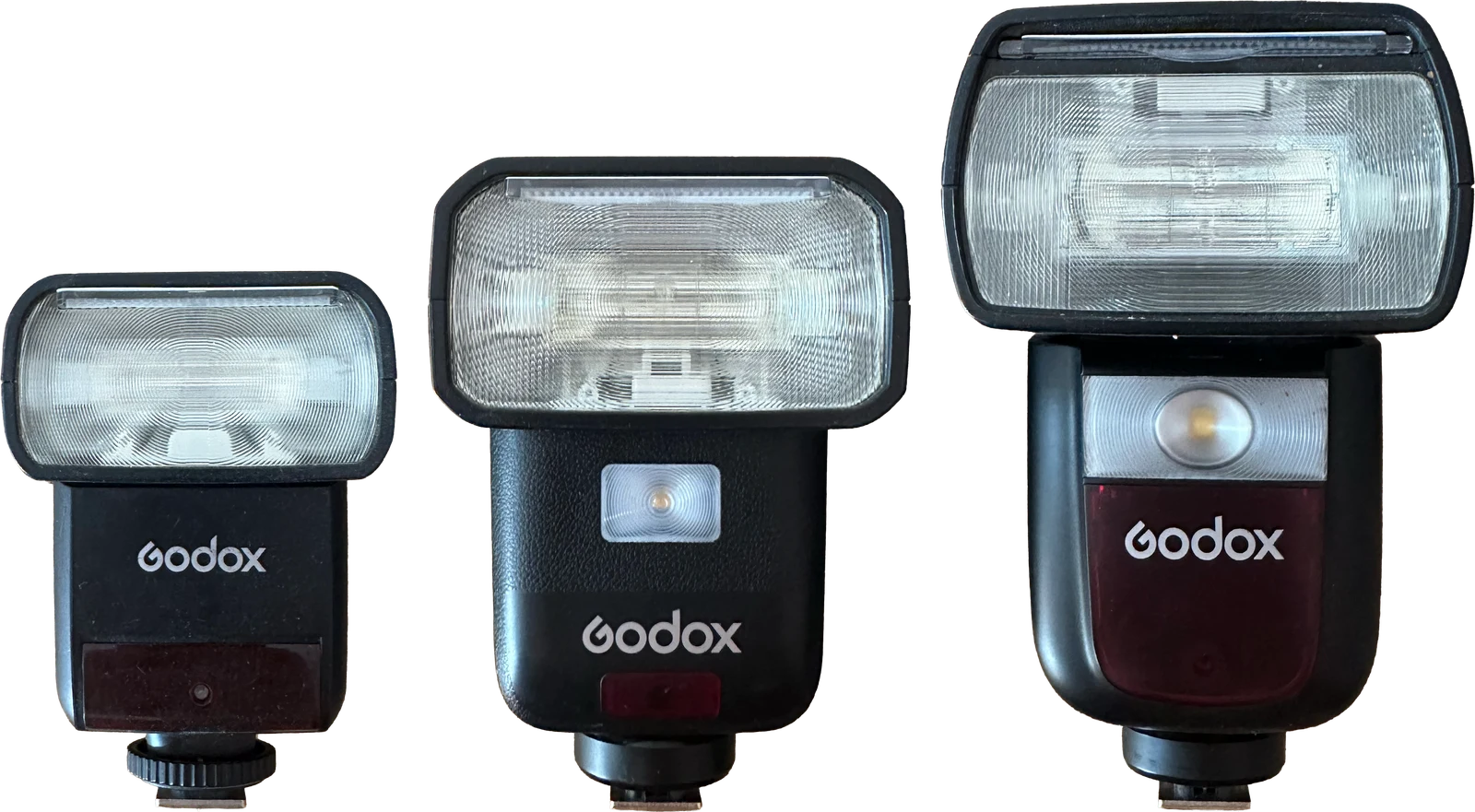
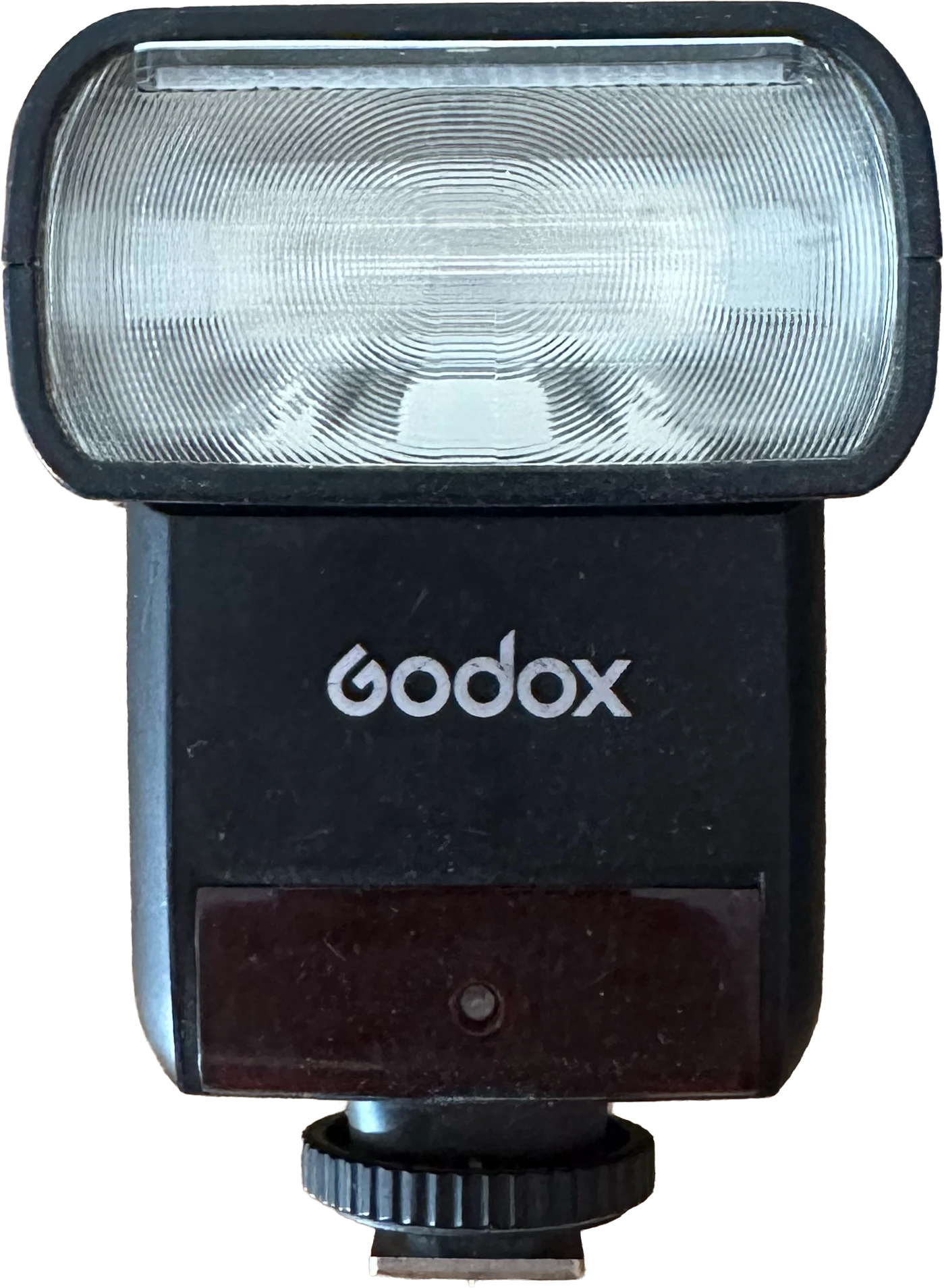
My go-to size class remains the TT350/V350 (photo below): compact and light, very pleasant to hand-hold. It runs on 2 AA batteries. One caveat though: it has no autofocus-assist LED, and its locking mechanism leaves something to be desired on Sony (brittle plastic — a friend of mine found out the hard way). I used it for 5 years.
My two favorites remain:
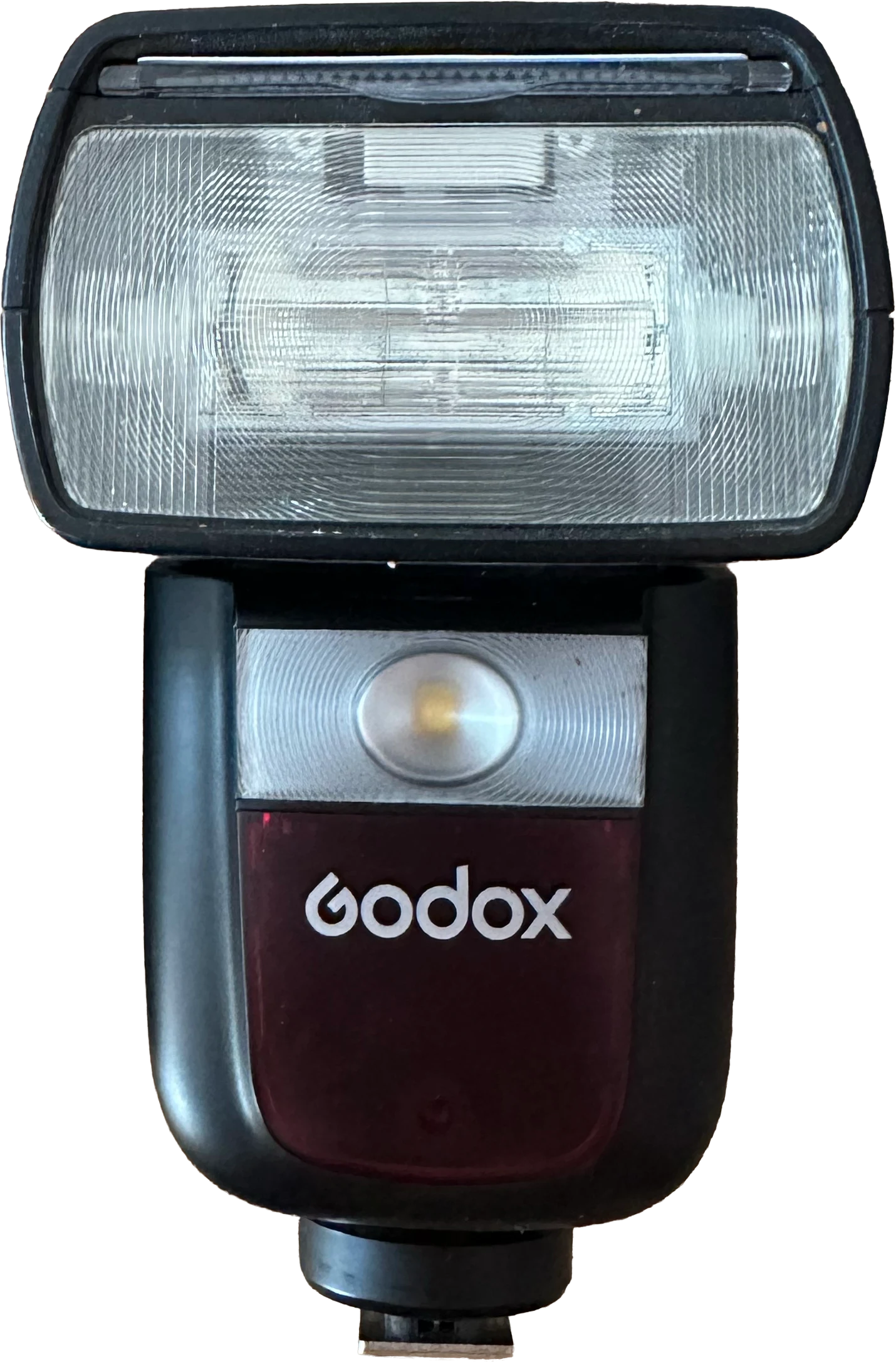
The V860III — standard size class, very powerful, with an AF-assist LED. My pick for off-camera flash. It runs on a battery pack, with very fast recycle times.
The V480, more recent — in-between size, battery-powered, very powerful, with a genuinely solid locking mechanism. I've been using it for a year and I'm very happy with it. It also has an autofocus-assist LED.
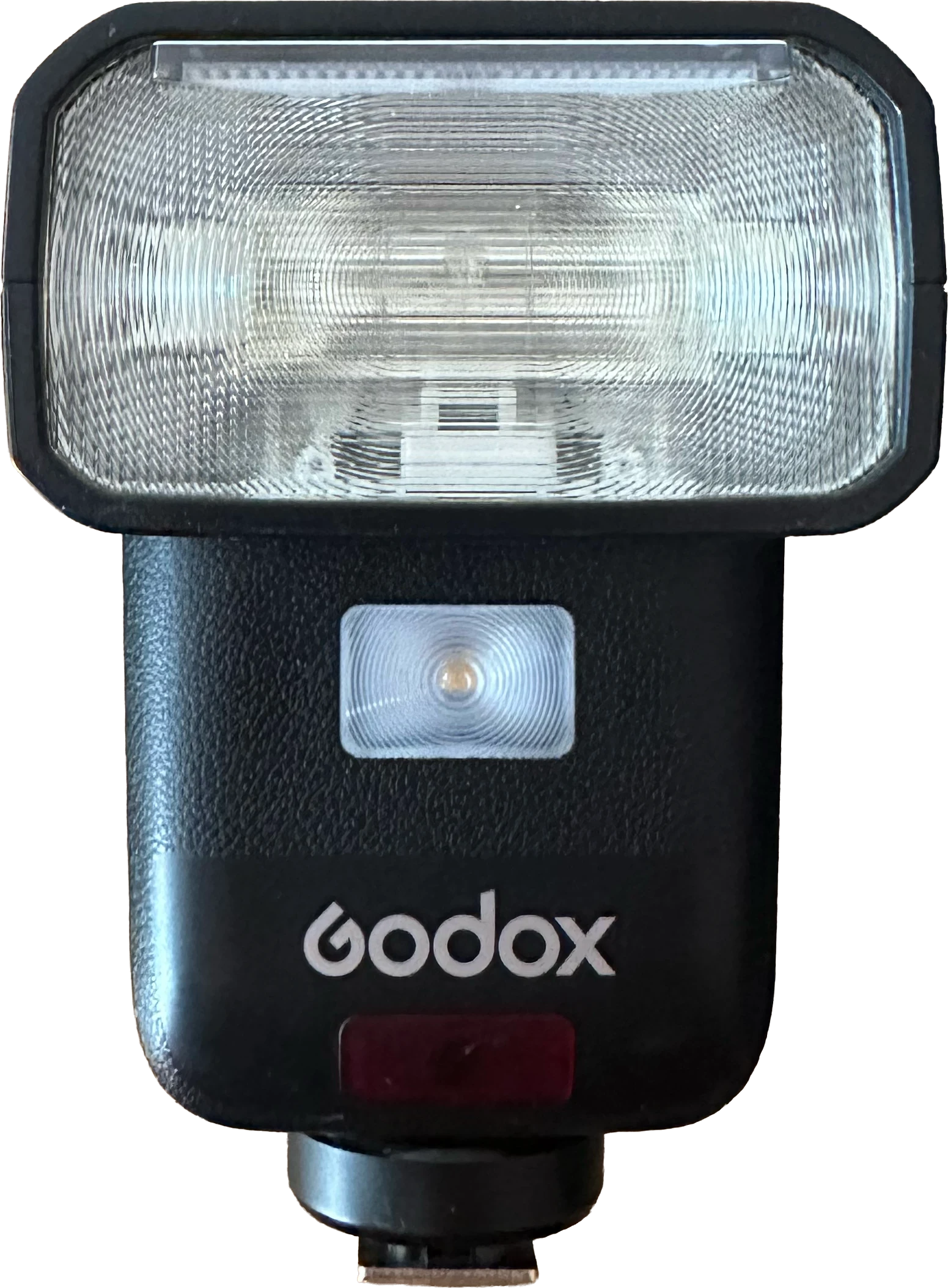
The choice between AA batteries and a rechargeable battery pack isn't trivial: a battery pack offers a noticeably shorter recycle time and more stable power output over the course of a field session — two advantages that matter a lot once you start firing many shots in a row. This is especially true for focus stacking (a technique we'll cover in a future article), where you need to fire off dozens of frames at slightly different focus distances: a recycle time that's too slow, or power that fades toward the end of the sequence, can ruin the whole stack.
Measuring the flash and the AF-assist LED when designing a diffuser
Precise measurements: an effective diffuser has to hug the geometry of the head to avoid any light leaks. You need to note the width/height of the emission window, the depth of the head, the thickness of the body at the mount, and the clearance needed for zoom and tilt.
The autofocus-assist LED: present on many flashes, it helps autofocus in low light — a real plus under tree cover. Its position needs to be accounted for in the design: a diffuser that fully covers it removes that benefit. So you need to leave a clear or translucent area in front of the LED, without compromising the evenness of the light.
White balance and color rendering
An often-overlooked point: the light from a speedlight isn't always perfectly stable in color temperature. It can drift slightly depending on the power level used, the battery's charge state, or wear on the flash tube — which shows up as small white balance shifts from one shot to the next within the same series.
The diffuser's interior coating also plays a role in the final color rendering: depending on the material and its tint, the light can come out slightly different (warmer, cooler, or with a color cast) once diffused. This is one of the parameters taken into account when designing the diffuser, to limit these color shifts.
In practice, it's best to shoot RAW so you can correct white balance in post, and don't hesitate to take a reading with a gray card if color consistency matters for the series.
In summary
Choosing a speedlight for macro comes down to balancing technical parameters (GN, TTL/manual, power range, recycle time), a size class suited to arm's-length use, and geometric compatibility with the diffuser. Precisely measuring your flash's head and checking for an AF-assist LED lets you make an informed choice.